Working near seabird colonies on cliff edges is one of those experiences that feels both intimate and fragile — up close you can see the earnest business of breeding, but every step or shout risks undoing that work. I’ve carried out surveys along a number of Britain’s coasts, and over time I’ve learned that careful planning, patience and the right kit let you collect useful data without causing disturbance. Below I share a practical approach to conducting a responsible cliff‑nest survey that protects birds, keeps you safe, and produces reliable observations.
Know the rules and local context
Before you leave the house, check whether the colony is in a protected area or subject to seasonal access restrictions. Many coastal sites are within SSSIs, SPAs or nature reserves; visiting during breeding season may require landowner permission or a licence from statutory bodies. Contact local conservation groups (RSPB, BTO, county bird clubs) — they often have recent colony maps, guidance and may welcome volunteers or coordinate surveys.
Why this matters: Disturbance can lead to nest abandonment or increased predation risk. Legal protections exist for good reasons, and local experts can help you avoid accidents and duplicate effort.
Timing your survey
Be aware of the breeding calendar for the species you’re surveying. Puffins, kittiwakes, guillemots, razorbills and shags have slightly different arrival, egg‑laying and chick‑rearing windows. Aim for timings that meet the purpose of your survey — for counting occupied nests, mid‑incubation is often best; for estimating chick numbers, time surveys when chicks are large enough to be visible but before fledging. Avoid early morning and late afternoon when adults are most active comings and goings; calmer mid‑day periods reduce flight disturbance.
Plan your approach route and vantage points
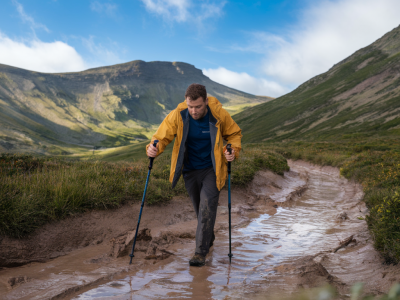
Plan routes that keep you on established paths and durable ground. Cliff tops and coastal slopes can be eroded or fragile — stick to firm ground and existing tracks. Use vantage points that allow a clear view without entering the colony zone. Often a carefully chosen headland, promontory or sheltered bay will give you the view you need.
Set up observation points:
Use optics and remote kit to avoid close approaches
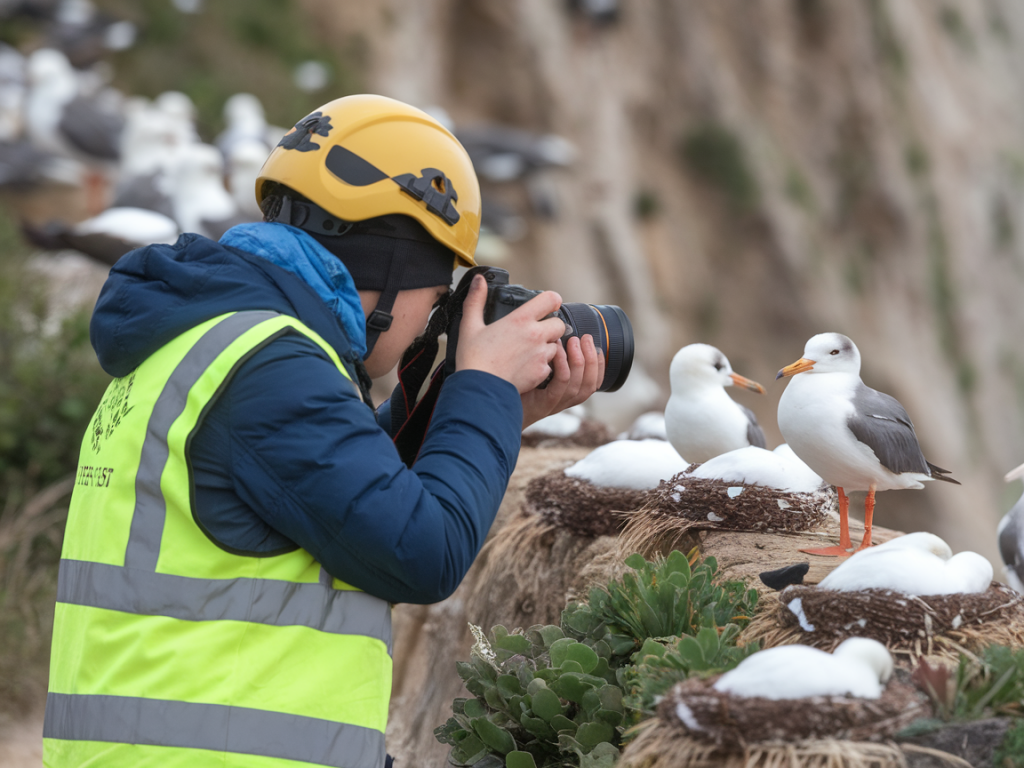
The single most effective way to avoid disturbance is to observe from distance. Quality optics let you see nest contents, identity of adults, and chick numbers without getting close enough to cause alarm.
Note: When using cameras to document nests, avoid moving into concealed positions that force birds to fly. Stand back, use high zoom and accept that sometimes the record will be suggestive rather than perfect.
Approach and behaviour on site
Move slowly, speak in low voices, and keep group sizes small (ideally one or two people). Predators such as ravens and gulls are quick to exploit flushed adults, so avoid creating repeated disturbance. If adults tense, gape, or stare at you, you’re likely too close — retreat a short distance and re‑assess.
How to record data responsibly
Good data come from consistency. Use a simple recording sheet or an app (eBird, iRecord, NatureCounts) and note time, weather, tide, species, number of adults, occupied nests, visible eggs/chicks, and behaviour (e.g., alarm calls, mobbing, predation). Photographs with timestamps are valuable but ensure any images are handled sensitively and not shared in a way that reveals exact nest locations publicly.
Biosecurity and kit care
Peatlands, nesting mounds and cliff vegetation can carry pathogens and invasive seeds. Clean boots, tripods and camera gear between sites to reduce cross‑site contamination. Carry a small brush and use boot disinfectant where appropriate. If you’ve been on agricultural land, clean thoroughly before moving to coastal reserves.
Species-specific considerations
Different seabirds react differently. Puffins shelter in burrows and are sensitive to repeated approaches near burrow mouths; guillemots and razorbills nest on ledges and are prone to chicks falling if adults flush; kittiwakes tend to be more tolerant but colony size and predation pressure change behaviour. Familiarise yourself with species notes so you can interpret behaviour and choose safe distances.
Safety for you and the birds
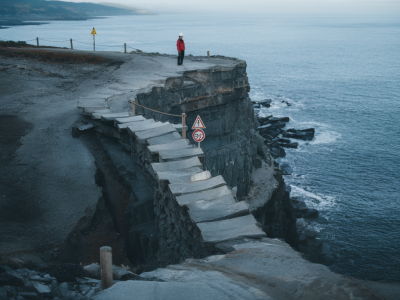
Cliff tops are hazardous. Keep at least a couple of metres from unstable edges, wear sturdy boots, and carry basic safety kit — map, compass/GPS (Garmin units are reliable), waterproofs, first aid and a charged phone. Let someone know your plans and expected return time. If you survey near rockfall or access paths, watch for loose ground and poor weather; fog and high winds quickly make a safe observation impossible.
Working with landowners and conservation groups
Always be courteous. If you meet landowners, explain the purpose of your visit and share any useful findings afterwards. Local wardens often value copies of your records and photographs. If you’re unsure whether to proceed at all, ask — the time taken to check once can save harm to birds and reputations.
When to stop and report concerns
If you see signs of acute disturbance (large numbers of birds leaving nests, chicks exposed, oiling, heavy predation), withdraw and report to the local wildlife rescue or statutory body. Likewise, if you spot illegal activity (disturbance, egging, unauthorized access) document discreetly and inform authorities rather than confronting perpetrators.
Responsible cliff‑nest surveys are a balance: getting close enough to learn without getting so close that you change what you came to see. Patience, good optics, local knowledge and a mindset of leaving no trace will let you contribute valuable records while keeping Britain’s seabird colonies thriving.