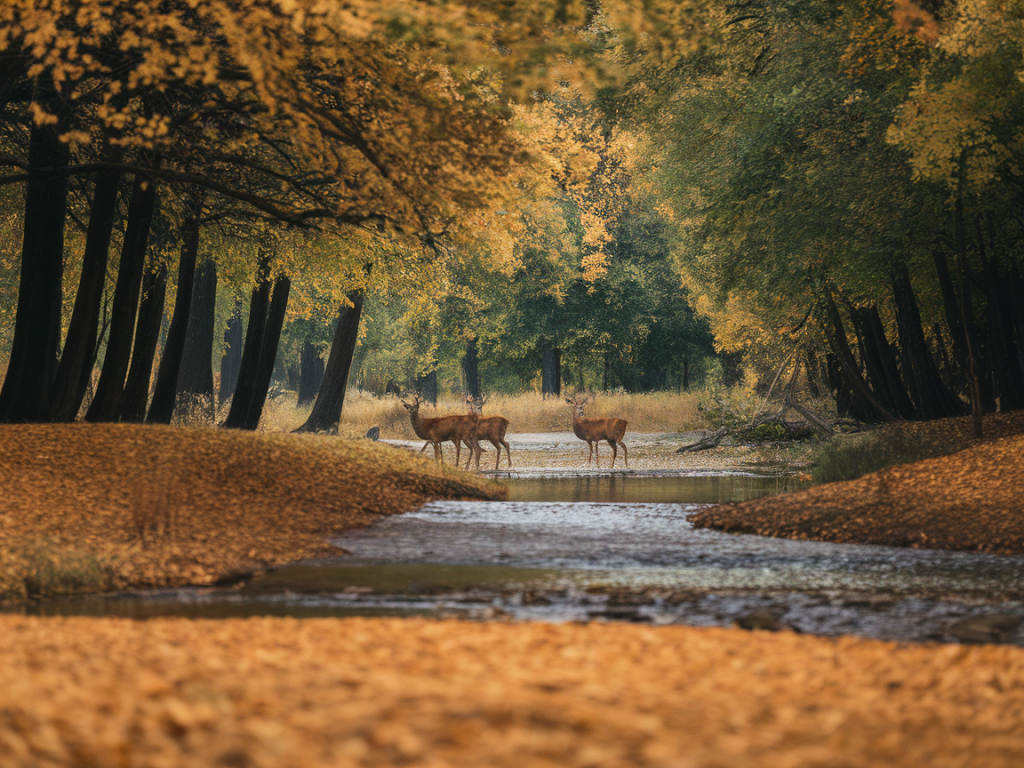
I remember the first time I came across a red deer rut on a windswept Scottish ridge: a raw, rasping chorus of stag calls rolling across peat and rock, a thunder of hooves as stags clashed for dominance. It felt like stepping into a different world — intimate yet public, thrilling yet fragile. Since then I've learned to time autumn walks so I can witness this elemental behaviour while keeping disturbance to an absolute minimum. Below I share what I look for, when and where to go, and how to be considerate in the field so these animals can get on with what they need to do.
When does the red deer rut happen?
Across Britain, the rut generally runs from late September into October, though timing varies with latitude and altitude. In lower-lying southern areas rut often peaks a little earlier; in upland Scotland and higher moors it can be a week or two later. Weather and local population dynamics also shift timings from year to year.
| Region | Typical peak |
|---|---|
| Lowland England & Wales | Late September - early October |
| Upland England (e.g. Peak District) | Late September - mid October |
| Scottish Highlands | Early - mid October |
Those dates are broad brush — I always check local reports (estate notices, wildlife groups, local rangers) and look for early signs in late September. If you want to plan a trip, aim for the region’s typical peak and allow a few days' flexibility.
What signs announce the rut?
You don't need to stumble into the middle of a brawl to know rutting is under way. Look and listen for:
- Roaring/calling — stags produce deep, nasal calls. They’re best heard at dawn and dusk but carry a long way, especially across open ground.
- Visible harems — groups of hinds with one or several stags nearby.
- Scent marking — deer will thrash vegetation and leave strong scents on their tarsal glands; you may notice pungent smells near rubbing posts.
- Tracks and droppings — increased concentrations of fresh droppings and new scrapes in soft ground.
- Agonistic behaviour — hair raised, stags parallel-walking, mock charges and, at full tilt, antler clashes.
Best times of day to go
Dawn and dusk are prime. Red deer are crepuscular: they’re most active in low-light hours. Early morning when the air is still tends to be best for hearing roaring and spotting movement. Late afternoon and into twilight can be equally productive. Midday is quieter, and animals often bed down; use that time to move quietly into position or head to higher ground for an overview.
How to watch without disrupting
Respect comes first. Rutting is energetically costly and stressful for deer — disturbance can cause stags to abandon harems, break fights prematurely, or push animals into exposed or dangerous terrain.
- Keep your distance. Use optics: a good pair of binoculars (I use Swarovski/Zeiss when I can; even mid-range Nikon or Vortex glass will do) and a telephoto lens for photography. If you can clearly identify individuals with binoculars, you're close enough.
- Stay out of the line of sight. Approach from downwind and keep to shelter where possible. Avoid walking directly towards the action or cutting across routes between stags and their harems.
- Limit noise and movement. Stags are on edge — sudden movements, children or dogs can trigger flight or aggressive responses.
- No flash photography. Flashing lights can panic animals and leave them vulnerable.
- Use hides sparingly and thoughtfully. If you plan to use a temporary hide, place it well in advance and make sure it’s sited so the deer are not funnelled towards roads or cliffs.
- Respect estate rules. Many deer areas are managed for stalking and conservation — follow signage, avoid closed tracks and check with land managers if in doubt.
Photography and optics — practical tips
I've photographed rutting stags handheld on rough ground and from a rigid tripod on a sheltered scrape. Both work if you follow the ethics above.
- Lens choice: 300–600mm is the sweet spot for most field work. I often carry a 100–400mm zoom (for mobility) and a 500mm prime when I know I'll be stationary.
- Stabilisation: monopods and bean bags are useful on uneven terrain; vibration reduction (VR/OS/IS) lenses help handheld shots at dawn/dusk.
- Low light: use wide-aperture glass (f/2.8–f/4) and push ISO as needed; modern bodies handle high ISO far better than they used to.
- Sound: turn off shutter beeps and use silent mode if available.
- Composition: capture behaviour and context — wide shots showing stag and landscape often tell a better story than a head-and-shoulders of antlers.
Safety for you and the deer
Stags in full rut can be unpredictable and powerful. Keep children and dogs under control and well away. If a stag pins you in with threatening displays — parallel-walking, head-down shuffles — reverse slowly and give it space. Don’t run: sudden flight can trigger chase instincts in any stressed animal.
How to choose a route and when to move
I plan routes that offer good vantage points — ridge lines, forestry edges or open moor with low cover. Approach quietly along natural contours, using gullies and hummocks for concealment. Move slowly, pause often and scan with binoculars rather than advancing until you’re sure of what’s ahead. If you spot a harem from afar, choose a location that offers a wide angle to watch movements rather than attempting to close the gap.
Legal and ethical considerations
There’s no special legal protection for red deer in Britain beyond the general wildlife and countryside laws, but land access and management rules apply. Always:
- Follow the Countryside Code — respect livestock, leave gates as you find them, and take litter home.
- Obey any local guidance from landowners or estates. Many have set times and routes that minimise disturbance during the rut.
- Report suspicious or harmful behaviour to rangers if you see people deliberately harassing deer. Disturbance can have real conservation consequences.
What to pack
- Binoculars and a spotting scope if you have one.
- Weatherproof layers — Merino base layers, a breathable waterproof like a Gore-Tex jacket, and a warm mid-layer; the weather in rutting country is often changeable.
- Comfortable boots with good grip for wet heather and peat.
- Map and compass (and a GPS backup). I still rely on paper maps for route choice where mobile signal is poor.
- Thermos and a small snack; long vigils at dawn can be cold and slow-moving.
Finally, remember that seeing the rut is as much about patience and timing as it is about being in the right place. Some of my most memorable encounters have been quiet: listening to a distant roar and watching a silhouette emerge in the mist, rather than forcing proximity. The aim is to witness, not to interrupt. That respect yields better photographs, richer experiences, and peace of mind that we've left the deer to do what they must.