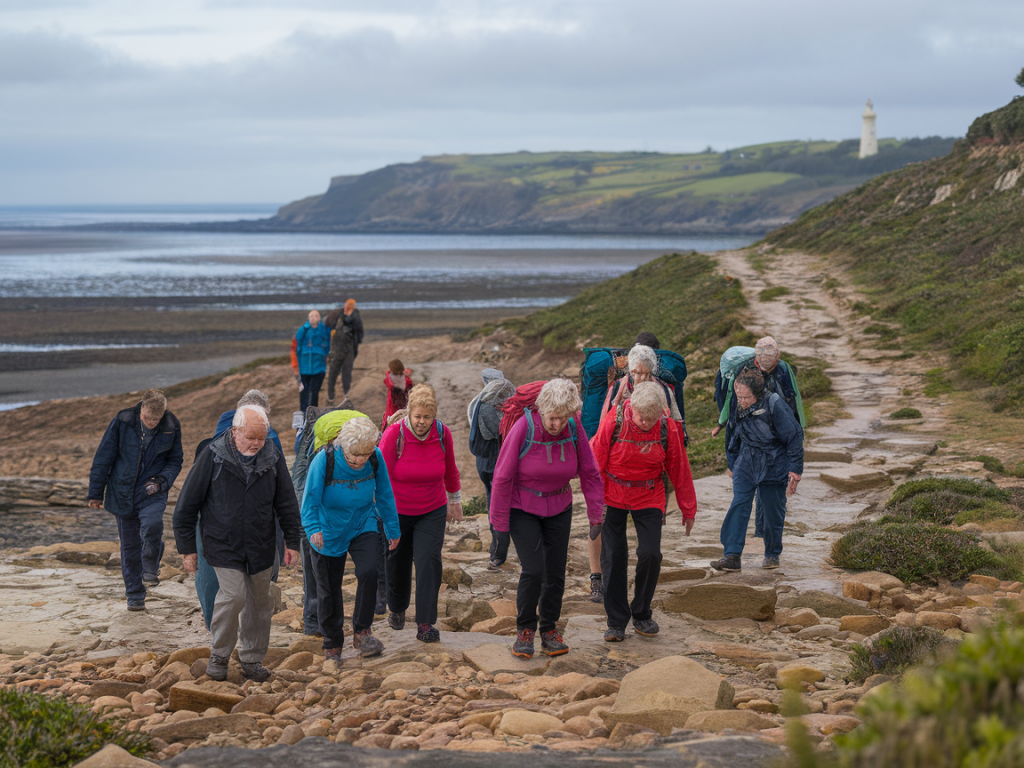
There’s a particular kind of freedom to be found in low-tide coastal scrambles: a squeeze of wildness, the reveal of rock platforms and seaweed-smoothed routes, and the quiet satisfaction of moving along a shoreline when most of the crowds are inland. As someone who spends a lot of time around Britain’s wild edges, I’ve learned to treat these days out as delicate, joyful operations — especially when I’m guiding older walkers or planning a route for myself in later years. Below I share how I choose routes, read tide windows, and keep scrambling gentle, safe and rewarding.
Choosing the right route
Not every coastal stretch is suitable for older walkers or those who prefer a less committing day. I look first for places with natural escape points (small beaches, gullies or tracks back to higher ground), obvious waymarks such as stacks or headlands for navigation, and rock that provides good purchase rather than polished slab. Favourite types of route for a gentle scramble are:
- Rock platforms with short, low step-ups — think routes where a single hand can stabilise a foot change.
- Coves with sandy or shingly exits at either end so you’re not forced into sustained exposed walking.
- Mixed cliff-foot paths where the scrambling sections are broken into short, restable pitches.
Some of my go-to coastal areas for sensible low-tide scrambles are parts of the Northumberland coast, the less hectic corners of the Pembrokeshire shore, and certain stretches of the South West Coast Path where sheltered coves reveal easier rock steps. Wherever you go, study recent route reports — local walking forums and community Facebook groups are often more useful than guidebooks for up-to-date info on erosion, seaweed or access changes.
Reading tide windows — the simple rules I use
Tides are the defining factor. I follow a conservative approach: never push the margin of safety. My basic rules are:
- Plan to be off the shore at least two hours before high tide for any route that would be cut off by rising water.
- Prefer routes with a wide low-tide window — areas that reveal extensive platforms give you time and options.
- Cross-check wind direction and swell forecasts — a strong onshore wind or unexpected swell can make a sheltered cove suddenly hazardous.
Practically, I put the planned low-tide time at the centre of my walk and allow for slower pace. Here’s a simple way I schedule a morning outing:
- Look up the day’s low tide time (apps like XTide or the UK Hydrographic Office tide tables are reliable).
- Plan to arrive at the shore at least 90 minutes before low tide (gives time to walk in as the beach reveals itself).
- Plan to finish the scramble and be off the lower rocks by low tide + 90 minutes (this gives a buffer if progress is slower).
| Planned low tide | Arrival on shore | Latest exit from shore |
|---|---|---|
| 11:30 | 10:00–10:30 | 13:00 |
Gentle scrambling techniques I teach
Scrambling needn’t be athletic. With small adjustments you can keep things comfortable and safe.
- Two points of contact is my mantra: try to keep two limbs securely engaged while moving the others. You’ll see many climbers using three, but for coastal scrambling a steady two-point rhythm reduces strain.
- Low centre of gravity — bend the knees, keep hips over your feet, and use your palms to balance rather than lean on extended arms.
- Step-downs instead of jumps — if a move requires dropping a foot, stabilise with a deliberate step down rather than hopping.
- Use the terrain — pockets, lichen patches, and etched grooves provide grip; avoid newly polished or wet stone if possible.
- Short rope or walking pole for confidence — a short runner or 3m length with a sling can offer a reassuring handhold between partners. Equally, an adjustable trekking pole (e.g. Black Diamond or Leki) used to probe holds and balance is invaluable.
Kit and clothing choices for older walkers
Comfort and reliability trump lightweight racers’ gear for these trips. I typically pack:
- A supportive, grippy shoe with a protected toe (approach shoes such as La Sportiva or Scarpa have good soles and structure).
- Ankle-supporting gaiter only if the route has a lot of shingle or bracken — otherwise low gaiters can trap water.
- Waterproof layers with breathable fabrics — a good rain shell and a lightweight insulating mid-layer.
- A small first-aid kit with blister plasters, a triangular bandage and painkillers.
- Waterproof map case, compass and a phone with offline maps; a small power bank for longer days.
- A headtorch even for daytime trips — it’s reassuring if you’re delayed or need to call in the last light.
Pacing and partner choices
Older walkers often underestimate the fatigue of constant balance work. I build in frequent, short rests — sit, take a sip, look around, and check feet for slippage. Scrambling with a partner of similar pace is important: avoid pairing a walker who wants to sprint with someone who prefers a measured rhythm. If you have a slower companion, agree on natural rest points beforehand — a boulder, a large rock pool, or the headland — so the group can reassemble easily.
Navigation and straightforward risk management
Keep navigation simple. Identify two prominent features that mark the entry and exit of the low-tide section. If fog or rain closes in, use the high ground escape early rather than pushing on. I always brief my companions on what "turn back" looks like — a specific place or time — so there’s no ambiguity.
Other risk measures I use:
- Tell someone where you’re going and your expected off-shore time.
- Check local access restrictions and nesting bird notices. Many cliffs are sensitive — we move quietly and keep dogs under control or away.
- Carry a whistle and know basic casualty handling; immobility on slippery rock progresses quickly to hypothermia on exposed coasts.
Leave no trace and conservation-minded choices
Low-tide exploration exposes fragile habitats: tide-pools, wrack beds and breeding nooks. I step lightly, avoid overturning rocks unless necessary, and never remove shells, seaweeds or creatures. If you photograph wildlife, use longer lenses and avoid crowding animals. Supporting local conservation groups and following byelaws protects the very margins we love to explore.
Finally, for older walkers the reward is not the length of the route but the quality of the place. A short, carefully chosen scramble at low tide can deliver the same sense of adventure and a deeper connection with the coastline as a longer, more exposed day. Plan conservatively, keep movement simple and steady, and you’ll find coastal scrambling can remain a lifelong pleasure.