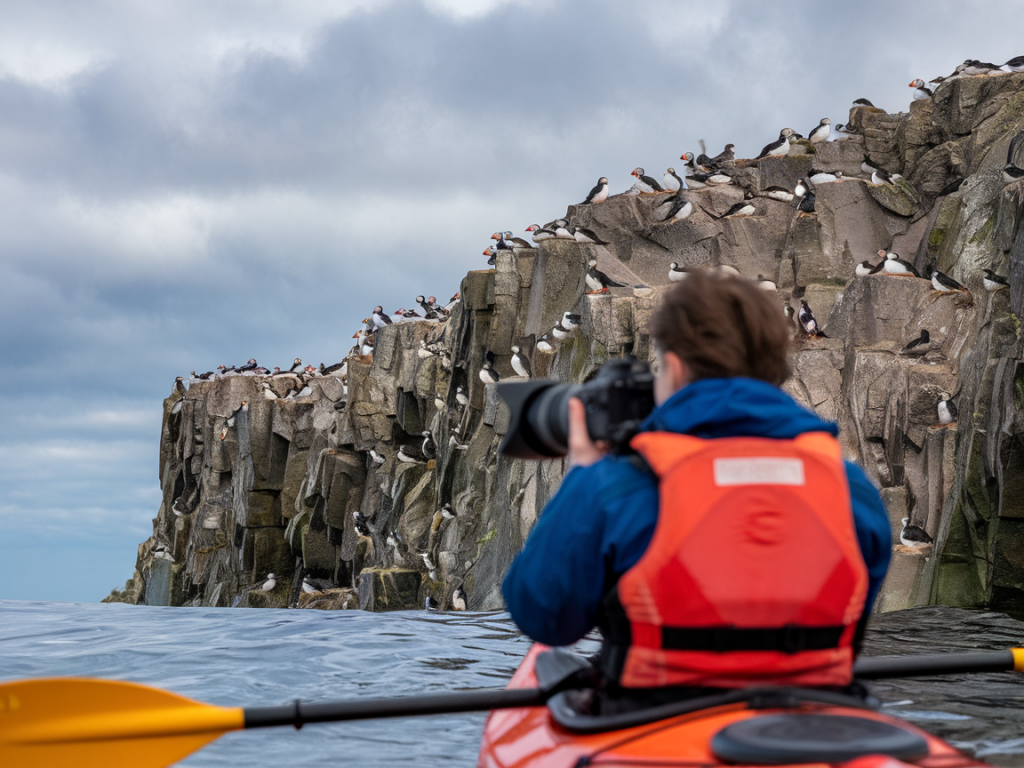
Photographing nesting puffins from a kayak is one of those experiences that feels impossible until you try it — then suddenly the world of sea cliffs, tiny burrows and comic-faced birds opens up in a way you can only access by water. Over years of coastal exploration I’ve learned how to get close enough for intimate shots while keeping disturbance to a minimum. Below is a step-by-step plan I use when I set out from Borderhike Co. to photograph puffins from a kayak. It blends practical paddling, respectful wildlife practice and photographic choices that work in Britain’s changeable light.
Know the birds and the rules before you launch
Puffins are colonial nesters and can be surprisingly tolerant of regular, distant human presence — but they are vulnerable during the breeding season. Before you paddle, check local guidance: many reserves have guidelines or temporary restrictions on how close boats can approach seabird cliffs. Marine Protected Areas and nature reserves often publish distances. If in doubt, err on the side of caution.
Learn the seasonality: in the UK, puffins arrive to breed from late spring through summer. Early mornings and late evenings usually offer the best light and quieter seas. Also study the colony’s behaviour from shore first if you can: where are most burrows, which sections of cliff are busiest, and which approach corridors (open water with fewer flights) might let you glide past without crossing flightlines?
Choose the right kayak and kit
Your craft should be stable, quiet and easily manoeuvred. I favour a sit-on-top or a stable sea kayak with a low freeboard — this helps keep profile low and lets me photograph from close to the water without large wakes. Inflatable kayaks can be fine if well-rigged, but avoid anything that blows around in gusts.
Essential kit I bring:
Camera gear I’ve found reliable:
| Item | Why I use it |
|---|---|
| Mirrorless body (eg. Sony A7 or Canon R) | Lightweight, good autofocus and strong high-ISO performance |
| Tele lens 300mm–600mm (or 100–400mm zoom) | Needed for close-up shots while keeping respectful distance |
| Wide-angle (24–35mm) | Context shots of cliffs, kayaks and landscape |
| Floating padded camera bag | Protects gear and aids recovery if dropped |
| Lens hood and microfiber cloths | Reduce glare and manage spray on the front element |
Plan your approach and paddling technique
Getting from launch to a good vantage point is about slow, deliberate movement. I think of it as three stages: approach, station-keeping and withdrawal.
As you approach, watch for obvious indicators of flightlines: areas where puffins repeatedly come and go from burrows to sea. Never position yourself under these corridors.
Camouflage, hide and body language
You don’t need ghillie suits, but minimising contrast and motion helps. Wear muted, non-reflective clothing and avoid bright lifejackets near the camera port (you can choose a darker over-garment to drape over the camera while shooting). Keep your head and torso low; put the camera on your knees or a small beanbag to steady it rather than extending it high above the kayak.
Move slowly. Slow bodily adjustments and soft breathing convey non-threat to birds. If a puffin stares at you or alters its behaviour, freeze. Often they’ll look, assess you as non-threatening, then return to normal.
Camera settings and composition tips
I shoot in RAW and prioritise shutter speed and focus mode for wildlife from a moving platform.
Compositionally, mix tight head-on or profile portraits with wider contextual frames showing the cliff and the kayak. The juxtaposition of the small, colourful puffin against vast sea and rock tells the story of marginal habitats.
Ethics and minimal-impact rules I follow
Respect is non-negotiable. My personal checklist before every approach:
If a puffin leaves a burrow and does not return within a few minutes, you’re too close. Remember that disturbance can reduce breeding success, and that repeated disturbances by multiple kayakers can have cumulative impacts. When you see others approaching in a way that might cause harm, consider repositioning or reporting the behaviour to the local warden.
Practical safety and shoreline etiquette
Kayak-based wildlife photography is inherently marine — check tides, currents and weather. I never go alone in exposed waters and tell someone my route and expected return. Wear a properly fitted buoyancy aid at all times and carry a whistle and VHF or mobile phone in a waterproof case.
Be mindful of other users: anglers, ferries and wildlife tours. Give larger boats wide berth and avoid creating a nuisance. On return, leave no trace: take all gear, litter and any unused bait away with you.
What to expect and the rewards of patience
Expect slow rewards. Puffins are charming characters but notoriously unpredictable. Some days you’ll paddle away with a handful of keeper images; other days you’ll simply enjoy watching them go about their business. The best shots often come when the birds have decided you are part of the background — that’s when they behave naturally and you can capture those small behaviours that tell a story: preening, bill-rubbing, food arrivals and burrow interactions.
Photographing puffins from a kayak is as much about being a careful visitor as it is about making pictures. If you keep respect at the centre of your practice, the coastline will open up many small moments worth returning for.