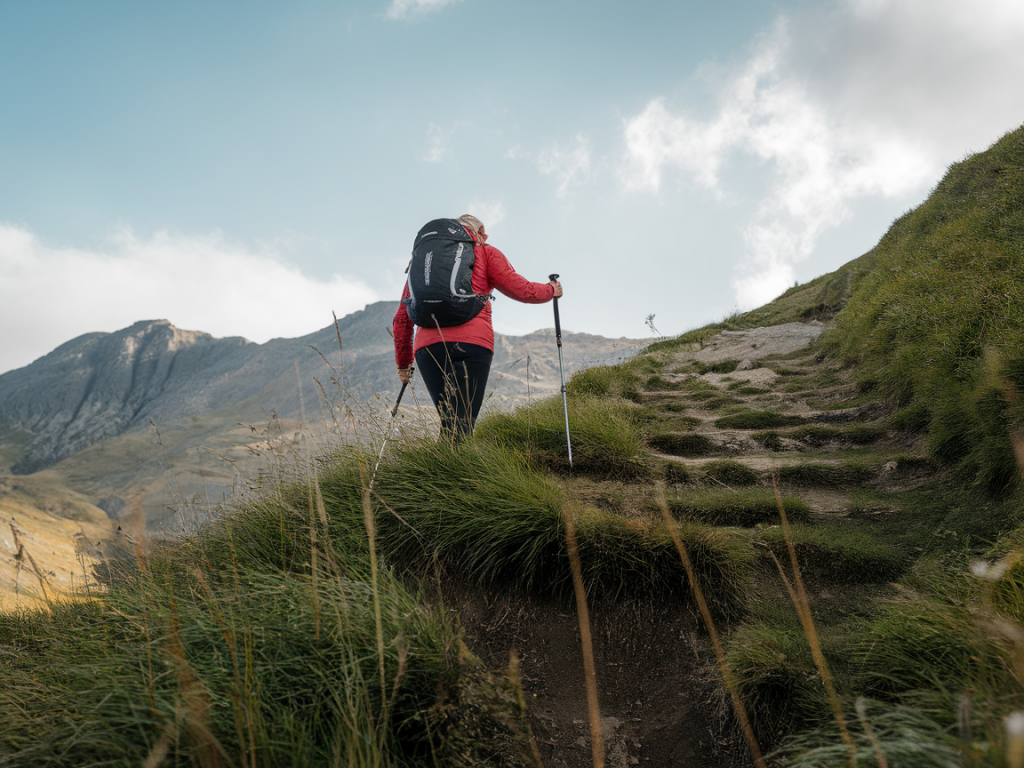
On many of the coastal scrambles and upland peat slopes I walk, there's a moment when a comfortable rhythm with walking poles suddenly feels insufficient. You reach a steep grassy exit — a short, eroded band of turf above a gully or a cliff toe — and your poles chatter, slip or refuse to find purchase. That's the moment I start thinking about swapping the poles for a short safety belay. Knowing when and how to make that transition has kept me upright more times than I can count, and in this piece I'll share the practical cues, kit choices and simple techniques I use on Britain's wild edges.
Why poles can be a liability on steep grassy exits
Poles are brilliant for rhythm, load-sharing and balance on rolling terrain, muddy tracks and long descents. But on steep grass they can become a false sense of security. A few common failure modes to watch for:
On a wet summer day on the Gower cliffs I watched a friend plant a pole that punched through moss and slid, the sudden shift throwing them toward the edge. That was the clearest lesson: when the ground ceases to promise a solid pole plant, it's time to change tactics.
Signs it’s time to switch to a short belay
I look for a few simple cues before unclipping my poles and reaching for my harness or sling:
When two or more of these conditions are present I begin the swap. On a September walk across the Cairngorms I found myself facing a steep peat lip above a burn: wet, angular, and with a narrow ledge below. Poles were no use — I clipped my sling and made a short belay across the lip before breasting the slope.
Kit I carry for quick short belays
There’s no need for a full trad rack for these moves. My usual low-profile kit includes:
My approach is minimalist — enough to create a reliable hand/hip-level attachment that reduces the risk of a slide, not a full belay for multi-pitch climbing.
How I set a short safety belay — step by step
Here's the simple sequence I use when the slope demands extra security:
Techniques for using the belay effectively
It’s not just about clipping in — how you use the belay matters:
When not to use a belay — alternatives
There are times a belay isn’t appropriate or necessary. If the slope is short and well-vegetated, or if there’s a clear rock step to use as a handhold, I’ll simply ditch the poles and handhold the route without a sling. In other situations I’ll downclimb sideways, keeping my weight low and using the slope edge as a toe edge for purchase.
Training and practice
Switching swiftly and safely between poles and belays is a skill. I practise at home on slopes of low consequence: set up a sling around a park bench or tree and move through a grassy bank with poles in hand, stowing and clipping as you go. Familiarity with your kit — especially how quickly you can deploy a sling and clip a carabiner single-handed — will pay dividends when the ground is less forgiving.
On routes where I expect these sections I pack deliberately: poles with quick-locks that fold away, a short sling in an easily reachable pocket and a locking carabiner clipped to a shoulder strap. The aim is simple — make the swap smoothly, stay present and keep the choice proportionate to the hazard. Once you’ve done it a few times, swapping poles for a short safety belay becomes less a dramatic manoeuvre and more a quiet, confident bit of risk management on the wild edges we love to explore.