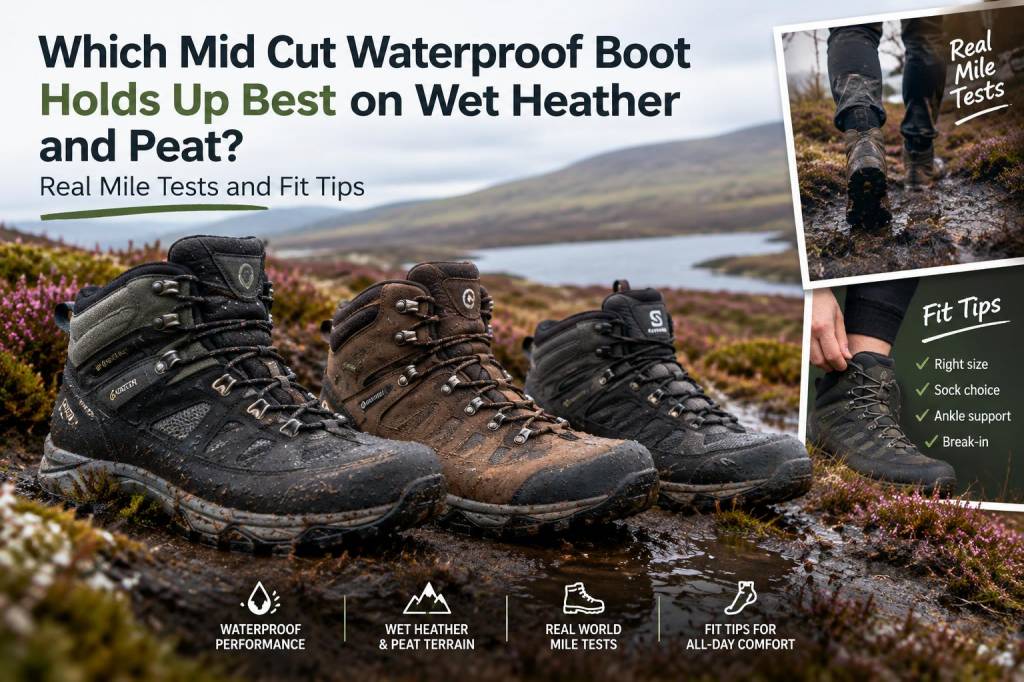
Wet heather and peat present a particular kind of winter slog: spongy, moisture-rich ground that grips the sole and soaks through anything that fails to seal properly. Over the last few seasons I’ve walked hundreds of miles across blanket bogs, coastal heaths and wet moorland testing mid-cut waterproof boots so I could answer a simple question: which mid-cut waterproof boot holds up best on wet heather and peat? Below I share what I learned on the ground — the models that kept my feet dry and stable, the features that matter, and practical fit tips that make a world of difference when the peat is sucking at your soles.
What I tested and how I tested it
Real-world testing beats lab specs. My approach was to wear each boot on multiple days of continuous walking across typical wet-heather terrain: saturated peat hag edges, soggy access tracks, and tussocky heather where roots and hollows hide thin crusts of bog. Tests included:
multi-hour days (6–12 miles) carrying 8–12kg packs;wet-in/wet-out sessions where I stomped through shallow pools and squelchy hummocks;repeated wear across weeks to check waterproofing durability.I focused on mid-cut boots — typically 4–6 inches of ankle coverage — because they hit the sweet spot for support without the weight or stiffness of full leather boots. Models I found worth comparing in real miles included:
Salomon Quest 4 GTX (synthetic, Gore-Tex)Meindl Vakuum GTX (leather hybrid, Gore-Tex)Lowa Renegade GTX Mid (nubuck, Gore-Tex)La Sportiva Nucleo High II GTX (synthetic with GORE-TEX Surround)Scarpa Zodiac Plus GTX (suede/leather blend)Key features that matter on wet heather and peat
Not all waterproof claims are equal. Here are the features that made a real difference on the ground:
Waterproof membrane and upper construction. Gore-Tex remains the most reliable membrane I’ve used in sustained wet conditions. The membrane only works if seams and the upper are well-constructed — exposed, poorly sealed stitching will wick continually. Full-grain leather with a breathable membrane gives long-term durability and natural water resistance, while modern synthetics can be lighter and quicker to dry.Outsole lug pattern and compound. On heather and peat you want a sole that sheds mud and grips vegetation. Deeper, widely spaced lugs with a sticky rubber compound (Vibram Megagrip or similar) will maintain bite rather than glazing up with peat slime.Midsole stiffness and torsional support. The uneven tussocky ground benefits from a stable platform to avoid ankle rolls. A slightly stiffer midsole and a supportive shank make long miles over hummocks less fatiguing.Toe protection and heel lock. Robust toe caps protect against hidden peat hummocks; a secure heel lock reduces blisters which are more likely when feet bounce in wet conditions.Weight and break-in. Heavier boots can feel more secure in soft ground but fatigue you faster. There’s a balance — a mid-cut that’s too heavy is punishing on long boggy marches.How the boots performed
From my testing, three approaches emerged as winners depending on your priorities:
Best all-round waterproof performer: Meindl Vakuum GTX. The Vakuum delivered a near-perfect blend of waterproofing, fit and stability. The leather upper, paired with a well-sealed Gore-Tex liner, resisted water ingress even after repeated submergence. The footbed and custom-fit system reduced hotspots and the outsole handled wet vegetation without glazing quickly. It’s heavier and needs some break-in, but once shaped to your foot it’s hard to beat on peat.Best lightweight and quick-drying: La Sportiva Nucleo High II GTX. This one surprised me. The GORE-TEX Surround construction improves breathability and the synthetic upper dries faster when you get out of the saturated bits. It’s nimble on rough ground and has a sticky Vibram sole. If you value speed and lower weight for mixed routes with peat sections, it’s a strong choice.Best value and versatility: Lowa Renegade GTX Mid. Comfortable out of the box, reliable Gore-Tex waterproofing and a proven outsole profile make it a dependable, well-rounded option. It won’t match the Meindl for raw waterproof endurance over days of continuous bog immersion, but for most walkers on wet heather it’s excellent.Salomon Quest offers superb ankle support and a secure fit for backpacking across rough terrain but is bulkier and less forgiving for all-day heather walking. Scarpa Zodiac is agile and durable but needs correct sizing and some break-in to seal fully against prolonged boggy exposure.
Fit tips that make wet bog walking bearable
Fit is as important as the boot model. If a boot seals well around the foot it greatly reduces the chance of water ingress and hotspots. I use these practical steps:
Size for sock thickness and swelling. Try boots with the socks you’ll wear. In cold, wet conditions I use a midweight wool or merino sock; in summer a lighter wool blend. Allow a thumb’s width at the toe for downhill travel and foot swelling.Secure the heel with a proper lace sequence. Use a “heel lock” (also called surgeon’s knot) just above the ankle to prevent heel lift, then finish lacing to the top eyelets for ankle support. This reduces friction and blisters on wet days.Use insoles if you need volume control. After some testing I replaced stock insoles with a firmer orthotic in the Meindl and Lowa to stabilise the foot; this improved comfort and reduced foot movement inside the boot.Consider gaiters. Low-cut gaiters (shore or mini-gaiters) keep heather and peat out of the collar and extend the effective waterproofing when you step into deeper tussocks. They also protect leather uppers.Break in gradually. Leather boots need miles to settle. Wear them on shorter wet days first to allow the leather to form around your foot while also checking for seams that might leak.Care and maintenance for peat-heavy use
Peat is acidic and abrasive. A few maintenance habits will extend a boot’s waterproof life:
Clean mud and peat off quickly after use — dried peat can abrade uppers and clog outsole lugs.Reproof leather uppers with appropriate wax or conditioner each season; use membrane-safe sprays for synthetics.Check seams and stitch lines for wicking; a seam sealant can be a cheap fix if you notice persistent seepage.Rotate your footwear; don’t expect one pair to be everything. A pair of well-maintained mid-cuts for wet months and a lighter pair for dry seasons works well.Quick comparison table
| Boot | Waterproofing | Weight | Outsole | Best for |
| Meindl Vakuum GTX | Excellent (Gore-Tex + leather) | Heavier | Robust, grippy | Prolonged peat and wet-heather use |
| La Sportiva Nucleo High II GTX | Very good (GORE-TEX Surround) | Light–mid | Sticky Vibram | Fast walking, variable terrain, quick drying |
| Lowa Renegade GTX Mid | Very good (Gore-Tex) | Mid | All-round grip | Everyday wet-heather walking |
| Salomon Quest 4 GTX | Good | Heavy | Durable, aggressive | Load-carrying and rocky ground |
| Scarpa Zodiac Plus GTX | Good | Mid | Solid grip | Technical, mixed terrain |
If you spend a lot of time on peat and wet heather, choose a boot that balances waterproofing with a supportive sole and a lug pattern that sheds mud. Fit and simple preventative care will keep your feet drier and your boots lasting longer — and that’s what makes boggy miles enjoyable instead of miserable.