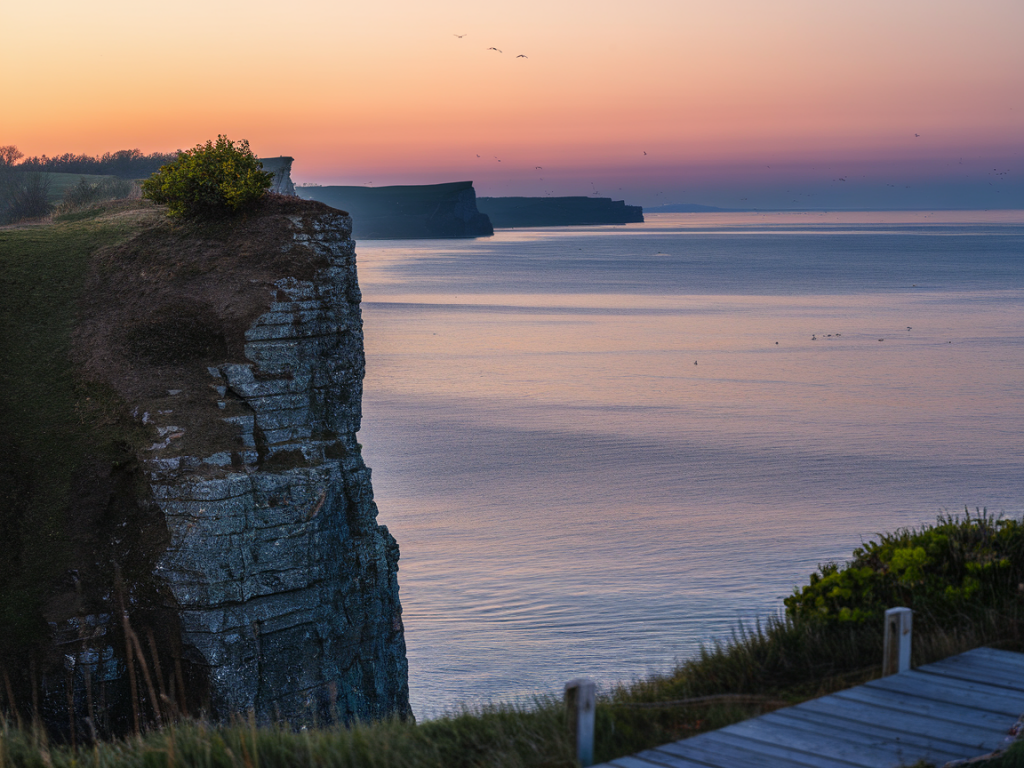
There are few things I find as quietly thrilling as watching gannets wheel and plunge against a late-summer sky, their plunges throwing up silver bursts that catch the last light. Dusk is a particular favourite: the day’s heat eases, human visitors thin out, and the colony settles into a rhythm where you can learn the birds’ routines without getting in their way. But sea cliffs and breeding gannets both demand respect — for safety and for conservation. Here’s how I plan a dusk cliff walk to watch gannets without disturbing breeding colonies, drawing on field experience, kit trials and the simple rules that keep birds and walkers safe.
Choosing the right place and time
My first stop is always local information. Nature reserves, national trust sites and RSPB reserves often publish guidance on access and viewing points. If the cliff is on protected land, there may be seasonal restrictions to keep people away from sensitive nesting areas. I look for vantage points that offer a good view of the colony from a distance — headlands, designated view platforms or paths that run parallel to the nest site.
Dusk is appealing because activity often peaks as parents return with food, but “dusk” isn’t a single moment. I plan to arrive at least an hour before sunset to find a respectful spot and let the birds carry on below me; lingering well after sunset is usually unnecessary and can increase disturbance if people noisily arrive in the fading light. I also check tide times and local weather — strong onshore winds can make cliff edges dangerous, and low visibility removes the subtle cues that tell you when birds are uncomfortable.
Navigation and safety planning
Cliffs are unforgiving. I always treat a gannet watch as a short hike with potential hazards.
Finally, I always tell someone where I’m going and when to expect me back. Mobile signal on cliffs can be spotty; having a plan matters more than hoping for a phone call to work.
Clothing and kit that help you watch without disturbing
Your kit should make you small in both sight and sound. I favour muted, layerable clothing — greys, deep greens and browns — so I don’t present a high-contrast silhouette against the sky. Breathable, quiet fabrics matter: ripstop jackets with noisy zips can announce your presence long before you’re within view.
Approach and behaviour on site
Approach quietly and slowly. Gannets are colony birds; they are used to noise to a point, but sudden movements, especially near nests, trigger defensive behaviour that can lead to nest abandonment or aggressive responses. Here are the rules I follow every time:
Understanding gannet behaviour and seasonal considerations
Knowing what gannets do at different times helps you plan. In spring and early summer, colonies are busiest with nest-building and chick-rearing; disturbance then can have the greatest impact. Late summer and early autumn often feel safer for watchers because chicks are larger and less likely to be abandoned, but parents are still bringing food and can be defensive.
At dusk, adults often return to the colony with food, offering spectacular plunge-dives offshore and purposeful landings. That’s the behaviour I want to observe — not flushed birds streaming off the cliff. To get the best view without interfering, watch for patterns: where incoming adults approach, which ledges are used for loafing, and where the main flight lines are. Position yourself away from those flight lines.
Engaging responsibly and supporting conservation
Part of planning a good watch is leaving the place better than you found it. I pick up any litter I find on the path, encourage quieter behaviour among fellow walkers and, where appropriate, talk to wardens about supporting local surveys or volunteering for tidy-up or monitoring days.
If you’re inspired to buy optics or kit based on a dusk watch, consider buying from retailers who support conservation causes or local reserves. Many optics brands partner with wildlife charities; even modest purchases create a link between recreation and conservation that I value.
What to do if you see disturbance
If you see people getting too close, approach calmly and explain — often politely pointing out signs or telling them about the breeding season works. If there’s a safety risk or deliberate harassment, contact the site manager or the local wildlife crime officer. Always prioritise the birds’ welfare: your intervention should reduce disturbance, not escalate it.
Watching gannets at dusk is one of those experiences that rewards patience, preparation and restraint. With careful planning — thinking about route, timing, kit and behaviour — you can enjoy the theatre of the cliffs while keeping the colony’s needs at the heart of the visit.