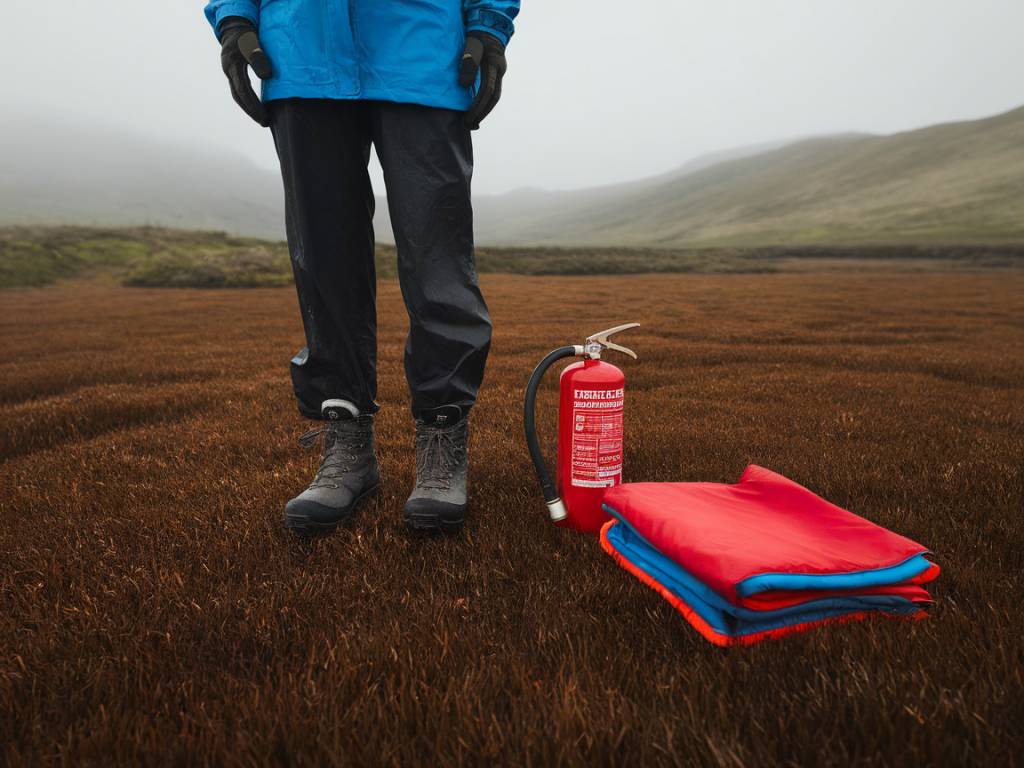
Peatlands feel like a different world: broad, soft, often silent, with a strange buoyancy underfoot and an honesty about weather — what starts as a light drizzle can become a sodden, wind-lashed slog in minutes. I’ve spent countless days walking across blanket bogs and raised mires around Britain, and packing for a peatland hike has become a small ritual: choose items that keep you dry, protect your feet and leave the landscape as you found it. Below I share what I take with me, why each piece matters, and a few practical tips for staying safe and low-impact on these fragile, watery edges.
Waterproofs: layers that actually work in peatland weather
In peatland country you don’t get to think of waterproofs as optional — they’re mission-critical. But it’s not just about having a waterproof jacket; it’s about choosing breathable, durable layers that stand up to wind, driving rain and the abrasion of tussocks and heather.
Tip: if your jacket or trousers start to wet out (surface water soaking through), a small tube of Nikwax or a spay rejuvenator in your first aid kit can buy you extra hours — but don’t expect miracles on a prolonged deluge.
Footwear and socks: the peatland foot armour
Feet win or lose the day on peat. The right footwear balances waterproofing, ankle support and sole grip for tussocky, often slippery ground.
Tip: if you suspect you'll need to cross deep bog or sedge, consider waterproof overtrousers that reach below the gaiter top. It’s awkward to be fixing a flooded boot mid-crossing.
Navigation and hazards: reading peatland terrain
Peatlands can be featureless; the odd ridge, wall or track matters. A reliable navigation kit and the skills to use it are crucial.
Hazards to watch for: quaking bogs, hidden pools, and fence lines with barbed wire. When in doubt, skirt the edge and probe with a walking pole rather than plunging in.
Fire safety and cooking: how to heat food without harming peat
Fire in peatland country is a sensitive matter. Peat burns slowly and smoulders deep below the surface; a negligent campfire can cause long-term damage and is often illegal. I treat open fire use on peat as a last resort and plan to use a stove wherever possible.
Tip: always pack out fuel canisters and any food waste. If you must have a small warming fire for emergency shelter, use only clean mineral surfaces or a contained fire pan and make absolutely sure the peat and soil are not scorched. In most cases a hot drink from a stove will do just fine.
Safety essentials and repairs
On remote peatlands you need to be self-reliant. My waterproof kit bag always contains a few items I hope I never use.
Tip: keep a lightweight tarp or poncho in your pack — it doubles as emergency shelter, a groundsheet when drying socks and a windbreak for a quick brew stop.
Camera and ethics: photographing peatland life without leaving a trace
Photographing peatland birds and plants requires stealth, patience and respect. I carry a compact setup that fits into a waterproof camera bag: a weather-sealed mirrorless body, a 24–70mm for landscapes, and a 70–200mm for cautious wildlife work. A small, sturdy tripod (I often use ground-level support rather than a full tripod to avoid sinking) and lens cloths are essential.
Finally, think of peatlands the way I do: as a shared, fragile archive of carbon, wildlife and culture. Pack to keep yourself safe and warm, pack to keep the place intact, and you’ll come away with memories (and photos) that reward thoughtful preparation.
| Item | Why | Recommended examples |
|---|---|---|
| Hardshell jacket | Keeps rain out, breathable | Montane, Rab, Arc'teryx |
| Waterproof trousers | Protects legs from spray and abrasion | Berghaus, Patagonia |
| Mid-layer (synthetic) | Warm even when damp | Rab Microlight, Montane Prism |
| Waterproof boots + gaiters | Support and keep peat out | Meindl, Scarpa; Rab gaiters |
| Stove and windscreen | Safe hot food without open fire | Jetboil, MSR, Trangia |
| Map, compass, GPS | Essential navigation | OS maps, Garmin eTrex |
| First aid + emergency bag | Safety in remote places | Custom kit |