I often think of fieldcraft as the quieter half of photography — the set of small, patient skills that let you collapse the distance between yourself and a scene without collapsing the scene itself. On Britain’s borders — where cliffs meet sea, peatlands breathe in mist, and woodlands keep their own hours — the most intimate landscape shots rarely come from brute force: they come from restraint, respect and a readiness to read the place.
Reading the lay of the land before lifting the camera
Before I pick up a lens I walk. I look for approaches that let me work with the landscape rather than against it: a sheltering hummock to lower my silhouette, a low ridge that blocks wind, a patch of heather that hides movement. Taking five extra minutes to find a natural hide can save hours of agitation for nearby wildlife and produce images with calmer, more authentic behaviour.
Ask yourself: where are the paths of least resistance for animals? Where does the light fall gently rather than cut? In practice that might mean positioning yourself slightly off-track, downwind of a feeding area, or using a tide-sculpted rock to mask your outline. On peatlands I favour the softer, sheltering hollows; on cliffs I use headlands and outcrops to reduce exposure; in woodlands I move with the shafts of light between trunks.
Optics and kit choices that help rather than hinder
Kit should be the quiet partner of your fieldcraft. For intimate landscape shots that include wildlife — a sheep on a shingly foreshore, a hare in the gorse, seabird in breeding plumage — I usually work with a 70–200mm or a 100–400mm zoom. These focal lengths let you compress foregrounds and backgrounds to create intimacy while keeping a respectful distance.
When I need more context — the animal within its peat-brown moor, the curlew beside tidal pools — I’ll swap to a 24–70mm. For even more immersive, ground-level work, a wide-angle 16–35mm on a small tripod or even handheld with a low profile can capture the texture of the foreground without encroaching on wildlife.
Relevant kit notes:
Silhouettes, angles and the human footprint
Composing intimate landscape images is often about reducing human evidence in the frame: footprints, bright jackets, or unnatural textures. I orient my camera to favour organic lines — fence posts, ribbing of a shoreline, the curve of a peat hag — and avoid shooting into common tracks that shout "visitor" to both viewers and animals.
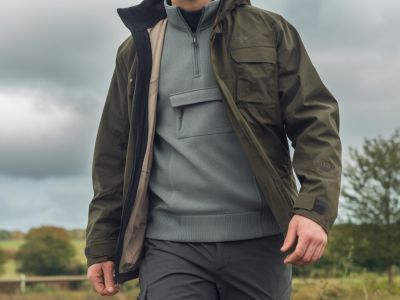
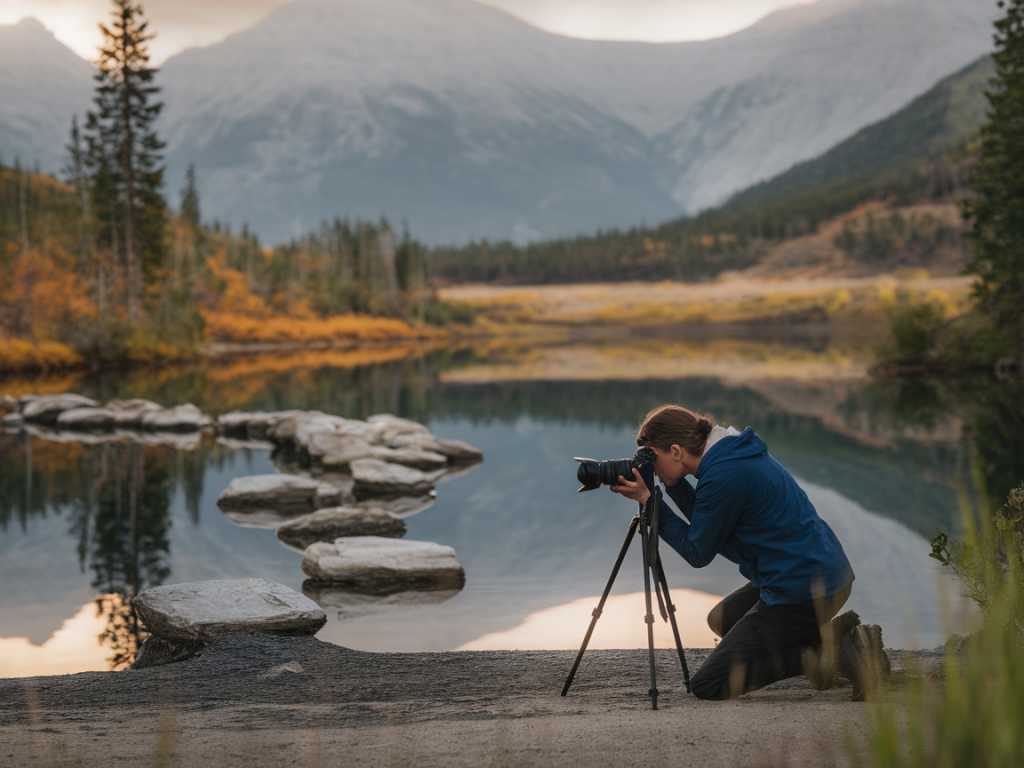
Low-angle working is central to intimacy. Getting down to eye level with a rabbit or sitting on the ground with a small camera bag as a backrest changes everything: foregrounds enlarge, backgrounds compress, and the relationship between subject and landscape becomes immediate. Use a beanbag, a small tarp to stay dry, and a neutral-coloured jacket so your presence blends into the scene.
Light, weather and timing as behavioural cues
Light shapes animal behaviour as much as it shapes your picture. Golden hour may deliver beautiful tones, but sometimes the low light is when gulls return to the cliffs and seals haul out, or when deer graze in the peatland brow. I plan shoots around both biological rhythms and weather: a still dawn favours ground-nesting birds; a soft, flat overcast day is excellent for detail and avoiding harsh shadows on animals.
Don’t underestimate small weather windows. A brief drift of mist can compress the distance between you and your subject visually, allowing a tighter composition without physical closeness. Likewise, a passing shower may prompt birds to shelter on ledges, giving you a framed portrait opportunity if you’ve positioned yourself considerately.
Stealth techniques that don’t frighten wildlife
Movement and sound are the usual culprits that alarm animals. I adopt a conservative pace: slow feet, deliberate pauses, and keeping my body turned slightly away when approaching. When photographing territorial species — skylarks on the moor, breeding guillemots on cliffs — I never move directly towards them; instead I work parallel to their usual movements.
Simple habits help:
Ethics and distance: the rule of thumb
There’s a delicate balance between a compelling image and an ethical one. I follow a personal rule: if the animal interrupts feeding, returns to vigilance, or moves away because of me, I’ve gone too close. For nesting birds, especially during the breeding season, I maintain a wide berth and use longer glass. On cliffs with guillemots and razorbills, even gentle movements can trigger abandonment of nests in extreme cases; the cost of one photograph is never worth the risk.
If you’re uncertain about how close is acceptable, local wildlife trusts and the RSPB provide distance guidance for specific species. When in doubt, err on the side of distance and be prepared to crop in post rather than advance physically.
Composition tactics for intimate landscapes
Composing an intimate landscape is less about grand vistas and more about relational detail: the curve of a bird’s back against a sunlit pool, the texture of peat hummocks in the foreground contrasting with a distant ridge. I use three compositional strategies repeatedly:
Don’t be afraid to let the landscape tell part of the story. An empty space beside a grazing sheep can be as evocative as a tight portrait; it hints at scale, solitude and the wider habitat.
Posture, patience and the final image
Photographing sensitively often means staying put. I’ll sit in one place for an hour or more, refining compositions as light shifts and animals resume natural behaviour. This patience pays dividends: you get the chance to observe small behavioural cues — a glance, a wing twitch — and translate them into a decisive frame.
In post, I prefer subtle corrections: exposure tweaks, clarity on textures, careful cropping to retain context. Heavy manipulation can betray the scene’s authenticity and, worse, mask the fact that the animal was disturbed to achieve the shot.
Practical checklist to carry in your pack
| Beanbag / small ground pod | For low-angle stability without big tripods |
| Neutral-coloured tarp | Keeps you dry and low-profile when sitting |
| Silencing tools | Lens cloth, camera noise settings, tape for rattly zips |
| Long lens (70–200mm or 100–400mm) | Keeps distance while composing intimate frames |
| Wide zoom (16–35mm or 24–70mm) | Context and ground-level landscape intimacy |
| Spare batteries & memory cards | Cold drains batteries fast; always be prepared |
Fieldcraft for intimate landscape photography is, in the end, an ethic as much as a technique. It’s about moving through places with curiosity rather than conquest, letting the landscape and its inhabitants set the tempo, and aiming for images that say as much about patience and respect as they do about composition and light.