On long, cold marches where the rain never seems to stop and wind bites through layers, keeping your energy up is as much about having the right calories as it is about having food you can eat quickly, cleanly and without leaving a mess. Over years of walking Britain’s coasts and peatlands I’ve learned to favour snacks that survive damp conditions, don’t rely on melting or fiddly wrappers, and produce zero litter on the hill. Below are the practical options and habits I use on wet days — tested on cliff edges, boggy ridges and muddy stiles.
What matters on cold, wet marches
Before we get to specific snacks, here are the principles I apply every time I pack food for a soggy day out:
Energy density: When you’re cold you burn more calories. Choose snacks that pack calories into a small, easy-to-access portion.Eatability in the wet: Avoid things that require a dry surface to unwrap or melt easily in pockets — chocolate bars can turn into a sticky mess in a leaking jacket.Bag-friendly: Food should fit into pockets or a small outer stash so you can eat without unpacking your whole day sack in a downpour.Zero-litter: I aim to carry no single-use wrappers onto the hill. That means reusable packaging or foods that are wrapper-free.Temperature resilience: Some snacks get rock-hard when cold (cheese can) while others become brittle. Choose a balance.Reusable packaging and waste-minimising kit
If you care about keeping places tidy, the easiest step is to change how you carry food. I stopped using disposable wrappers years ago — here’s what I now pack:
Small drybags or stuff sacks: Simple, waterproof and compressible. I keep nuts, bars and jerky in a 0.5–1 litre drybag to keep them dry and contained.Silicone reusable bags: Stasher-style bags are brilliant for sandwiches, flapjacks and chopped fruit. They close reliably, are lightweight and need no extra seal.Beeswax wraps: For short outings beeswax wraps work well with sandwiches or oat squares and are lighter than a plastic tub.Insulated food jar or Thermos: For hot porridge or stews on grim days, a good 500ml flask is a game-changer. Even a hot brew adds calories and morale.Top snack picks for wet, cold conditions
Below are the snacks I regularly reach for. Each is chosen because it stays edible in the rain, is easy to portion, and can be carried without creating litter.
| Snack | Why I use it | How I carry it |
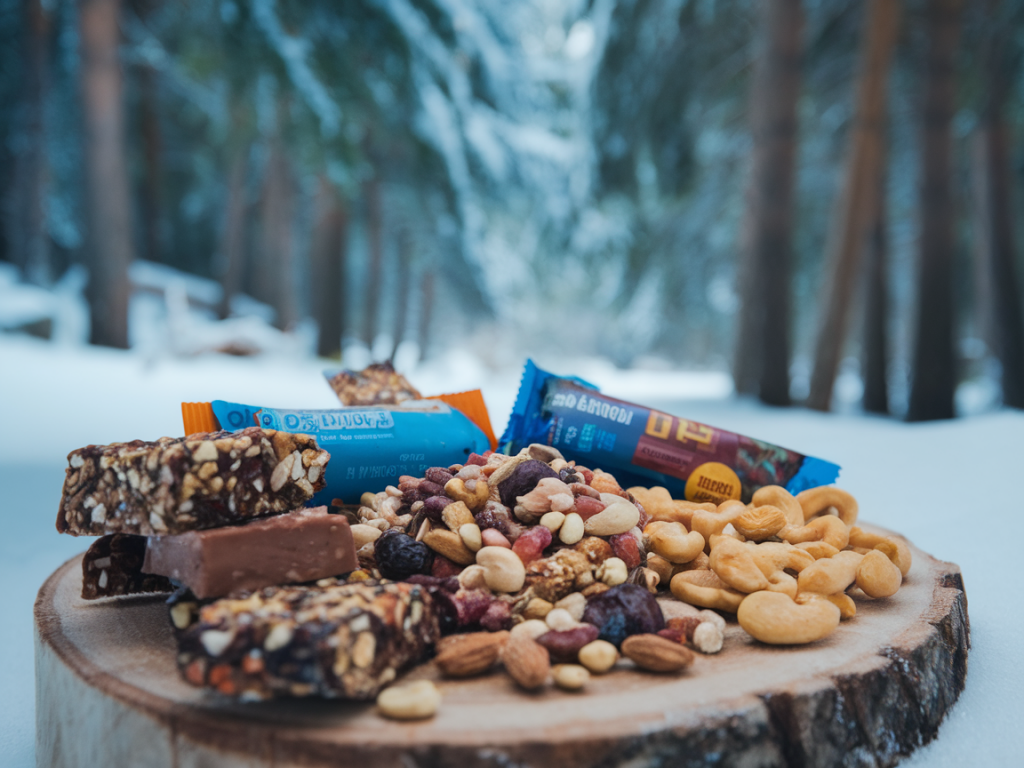
| Nuts & nut mixes (walnuts, almonds, peanuts) | High calorie, warming fats and proteins; ready to eat in rain | Small silicone bag or drybag |
| Homemade flapjacks / oat bars | Comforting carbs that don’t melt, filling and easy to portion | Wrapped in beeswax or cut and kept in a tin |
| Beef jerky / biltong | Portable protein, durable in wet weather | Reusable silicone bag |
| Energy balls (dates, oats, nut butter) | Compact, no crumbs, easy to eat one-handed | Small airtight tin |
| Hard cheese (e.g., Cheddar) | Good savoury calories; doesn’t melt quickly in cold | Beeswax wrap or small tub |
| Hot soup or porridge in Thermos | Warmth + calories; lifts morale in miserable weather | Insulated jar |
| Dried fruit (apricots, raisins) | Quick sugars, lightweight | Silicone bag or drybag |
Quick recipes I use on the trail
Two simple things I make at home that travel well and create no waste on the hill:
Oaty flapjacks — mix 300g oats, 150g nut butter (or butter+golden syrup if vegetarians prefer), 100g seeds (sunflower/flax), 100g chopped dried fruit. Press into a tin, bake at 170°C for 20–25 minutes. Cut into squares and wrap in beeswax or stack in a small tin. They survive rain, are chewy rather than crumbly, and provide slow-release energy.Date & nut energy balls — blend 250g pitted dates, 150g mixed nuts, a tablespoon cocoa (optional), and a pinch of salt until sticky. Roll into walnut-sized balls and dust in desiccated coconut. Keep in a small tin; they’re zero-crumb, high-calorie and easy to eat on the move.Hot food and drink: carry smart
A hot drink or hot food can be transformational on a wet day. My tips:
Fill a Thermos with boiling water before you set off — even after several hours some heat remains and makes a brew possible.Use an insulated food jar for porridge. Pre-cook for 80% and pour boiling water to finish — much less fiddly. If you prefer savoury, try a hot bean stew; it won’t spill if the jar is upright in your pack.Bring a lightweight cup that nests over the flask to minimise separate items.Practical eating in the rain
Eating while it’s raining doesn’t have to be awkward. My routine:
Stash snacks inside an outer pocket or chest pocket so you can access them under your hood without exposing everything to the elements.When stopping, shelter behind a rock, tree or in a gap in the lee of a dyke. Sit on your pack or a waterproof mat rather than the ground.Keep a small wet-wipe or pack towel to dry hands and wrap any smudges; this prevents sticky residue getting into your gear.Wildlife and conservation considerations
Part of walking Britain’s edges is sharing those places with wildlife. Some practical notes I’ve picked up:
Don’t feed birds or wildlife intentionally. Bread and many snacks are harmful — the temptation to share with curious gulls or corvids ruins their foraging behaviour and brings litter.Carry out everything you bring in. I once removed a soggy pile of discarded chocolate wrappers from a clifftop nesting area; it took ten minutes but felt worth it.Use compostable or natural packaging at home if you must use a disposable item, but never expect the countryside to replace municipal waste systems.Brand notes and kit I trust
I don’t take sponsorship, but over the years I’ve come to prefer certain products because they last and perform. My go-to items are:
Stasher silicone bags — robust, easy to clean and lighter than many small tubs.Stanley/Esbit flasks — solid insulated flasks that retain heat for hours when pre-warmed.Reusable beeswax wraps from local makers — good for sandwiches and wrapping cheese without plastic.Small metal tins (film canister size) for energy balls or biltong — crush-proof and smell-sealed.On the wet edges of Britain I’ve learned that good snacks are not just about calories but about habits. Keeping food dry, easy-to-eat and free of disposable wrappers makes a march smoother and protects the places we walk. Little changes — a tin instead of a wrapper, a Thermos instead of a shop hot drink — add up. You’ll eat better, carry less mess, and leave the wild borders in the same state you found them.