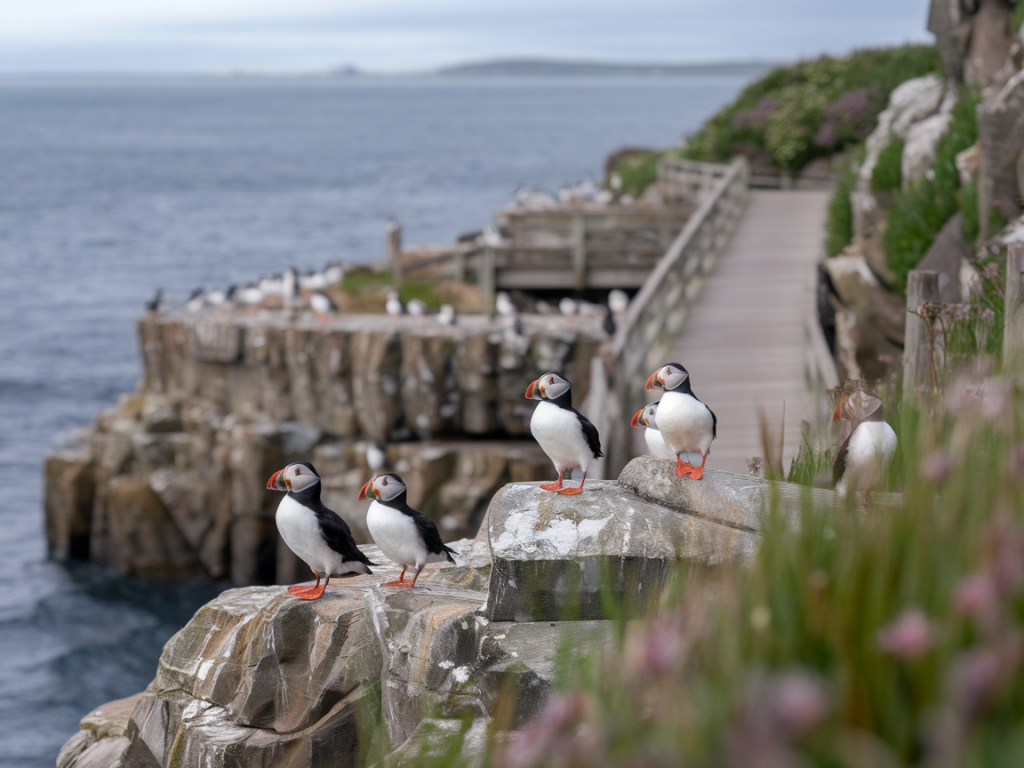
When I plan a trip to see puffins on the Farne Islands I start from one simple idea: the seabird colony must come first. You can make spectacular images and memories without putting breeding birds at risk — but it takes intention. Below I lay out how I pick a low-impact route, the timings that matter, landing and on-island behaviour, and practical photography limits that let you get intimate images without causing disturbance.
Choose the right island and operator
Not every Farne is equal for low-impact visits. Some islands have well-established visitor routes, landing points and wardens; others are left deliberately quiet for sensitive colonies. I only travel with licensed boat operators who work with island managers and wardens. From Seahouses there are several reputable skippers who know which islands are open to landings on any given day and who check for bad weather, heavy swell or active disturbance.
Before you book, ask the boat operator these questions:
If they can’t answer confidently, find another operator. The islands are managed for conservation; responsible skippers are used to liaising with wardens and the National Trust/RSPB staff.
Seasonal timings that reduce disturbance
Timing your visit is the single biggest way to reduce impact. Puffins arrive in spring to breed and are most sensitive at two moments: early nesting and chick fledging.
| Period | What to expect | Impact guidance |
|---|---|---|
| Late April – May | Birds establishing burrows, egg-laying begins | Quiet movement; avoid approaching burrows. Limit visits if wardens advise. |
| June – mid July | Eggs hatch; adults ferry fish to chicks | Good viewing with caution. Keep distance and follow paths. |
| Late July – August | Chicks preparing to fledge; high sensitivity | Avoid close approaches; heed any temporary restrictions or stay off islands with fledging colonies. |
| September onwards | Most seabirds gone, islands quieter | Lower disturbance risk; some islands closed for habitat recovery. |
My rule of thumb: avoid the very start of the breeding season if you want to limit risk, and be extra careful during the fledging window when chicks are nervous and adults distractible. Check the island status on the National Trust or local warden updates before you go.
Approach and landing: low-impact practices
How you approach the island matters as much as what you do once ashore.
When a boat operator asks you to stay seated during landing, it’s not bureaucracy — it protects the colony and keeps everyone safe. I’ve seen neat landings become chaotic when a group tries to rush ashore for a “better” angle; calm is part of being considerate.
On-island routing: keep the birds and their burrows safe
Once ashore, follow clear rules and simple habits that prevent trampling and disturbance:
I’ll often sit at a low angle away from the main track and wait for birds to come into view. Remaining still and patient yields far more natural behaviour than chasing birds across short vegetation.
Photography limits and ethical techniques
Photography is one of the biggest causes of disturbance if done without thought. Here are the limits and techniques I use to get good pictures while keeping puffins safe.
I routinely recommend shooting wide as well as tight. A 24-70mm captures context — the cliff, lighthouse or colony composition — which tells a better conservation story than endless tight portraits. Use cropping to refine later rather than encroaching on the colony for a closer frame.
Behavioral signs that you’re too close
Know the signs of stress so you can back off before real harm occurs. If you see any of these, increase distance immediately:
Practical kit and logistical tips
My daypack for a Farne trip is minimalist and geared toward low footprint:
Boat timing is also a factor: early morning often brings calmer seas and quieter bird activity. However, if the colony feels crowded with other visitors, I’ll delay or pick a different island. Low-impact visiting sometimes means saying no when conditions aren’t right.
Above all, follow wardens’ instructions and island signage. I’ve been guided off tempting routes by wardens who pointed out newly occupied areas; their local knowledge is invaluable. Respecting the colony means you’ll leave with better photographs and the satisfaction of having put the birds first.